
RIP David Hockney
looking back at his art and style.

On June the 11th 2026, the day David Hockney died aged 88, I found myself on Malibu beach stretching my legs post the 11 hour flight from London. It felt poignant to be so close to one of his favourite places and just a shells throw from his beachside property. (Marvel at his other hillside LA home here in Architectural Digest.)
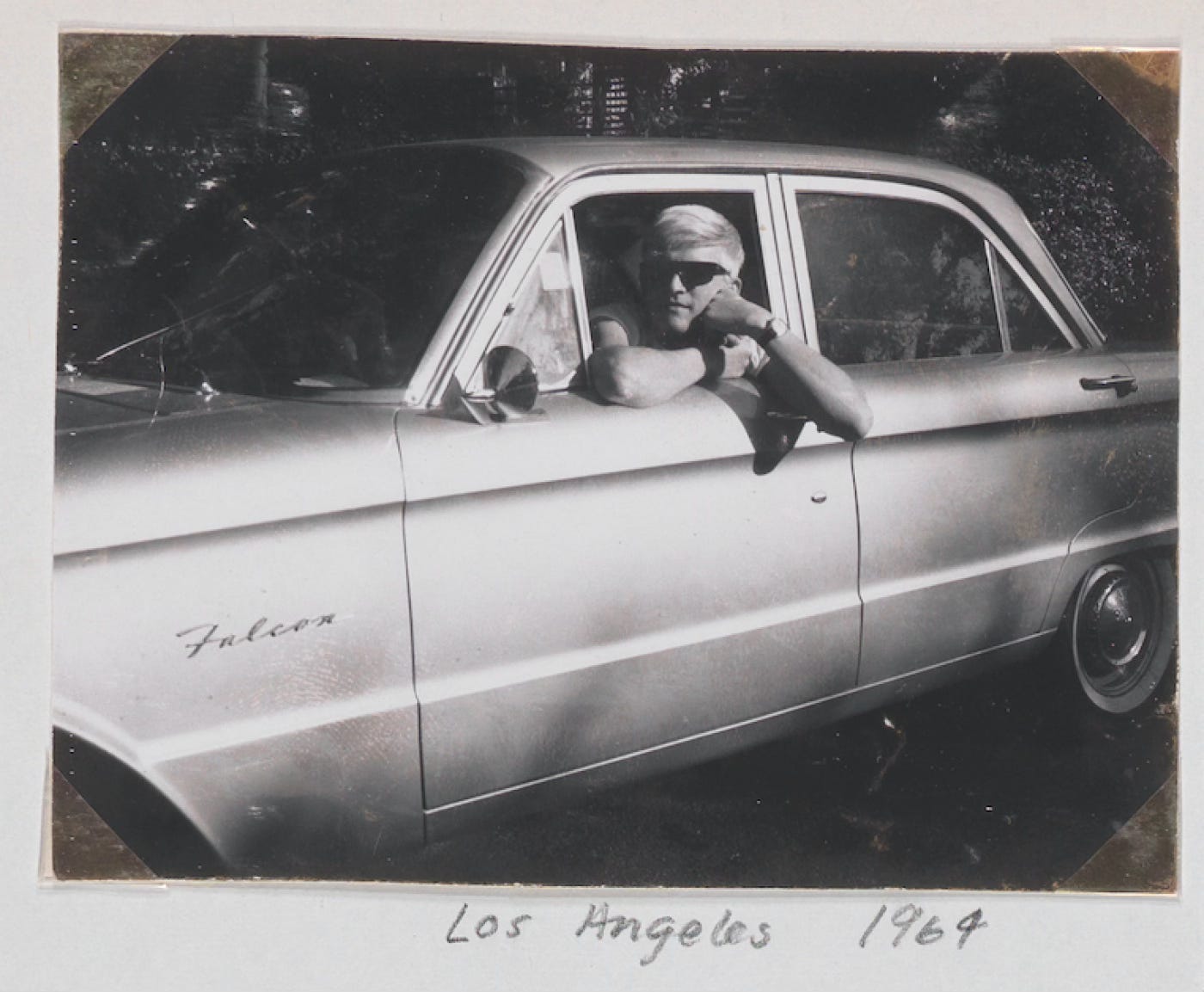
Brits love to moan about Los Angeles, whinging over its residents affection for green juice, athleisure and general peppy behaviour — reader it was ‘Wellness Weekend’ on Malibu Pier when I was last there. Our buttoned up nature and button down shirts struggle to squeeze into the Californian oversharing and overachieving disposition, but not David Hockney who called the city home from 1964-2005, returning later in 2013. He thrived in the vibrant colour, the persistent light and sheer magnitude of the ocean views and winding hills LA boasted —“Everyone wore white socks, and it was always sunny…It was the first time I’d seen so many shades of bright yellow and orange.”
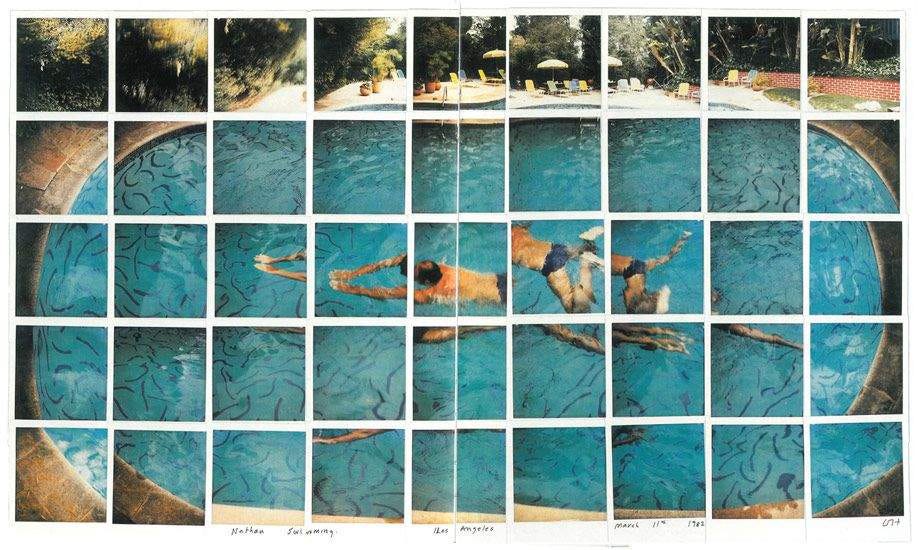
I love the idea of Hockney puffing away on one his many beloved ciggies, so blatantly ignoring the cities worship to health, talking to Malibu neighbours in his broad Bradford drawl. I wonder if they understood a single word he said? He was a rebellious lifelong smoker. I still chuckle at Hockney’s up yours one liner, “I've had three doctors in the past 40 or so years. They all told me to give up smoking and now they're all dead.”
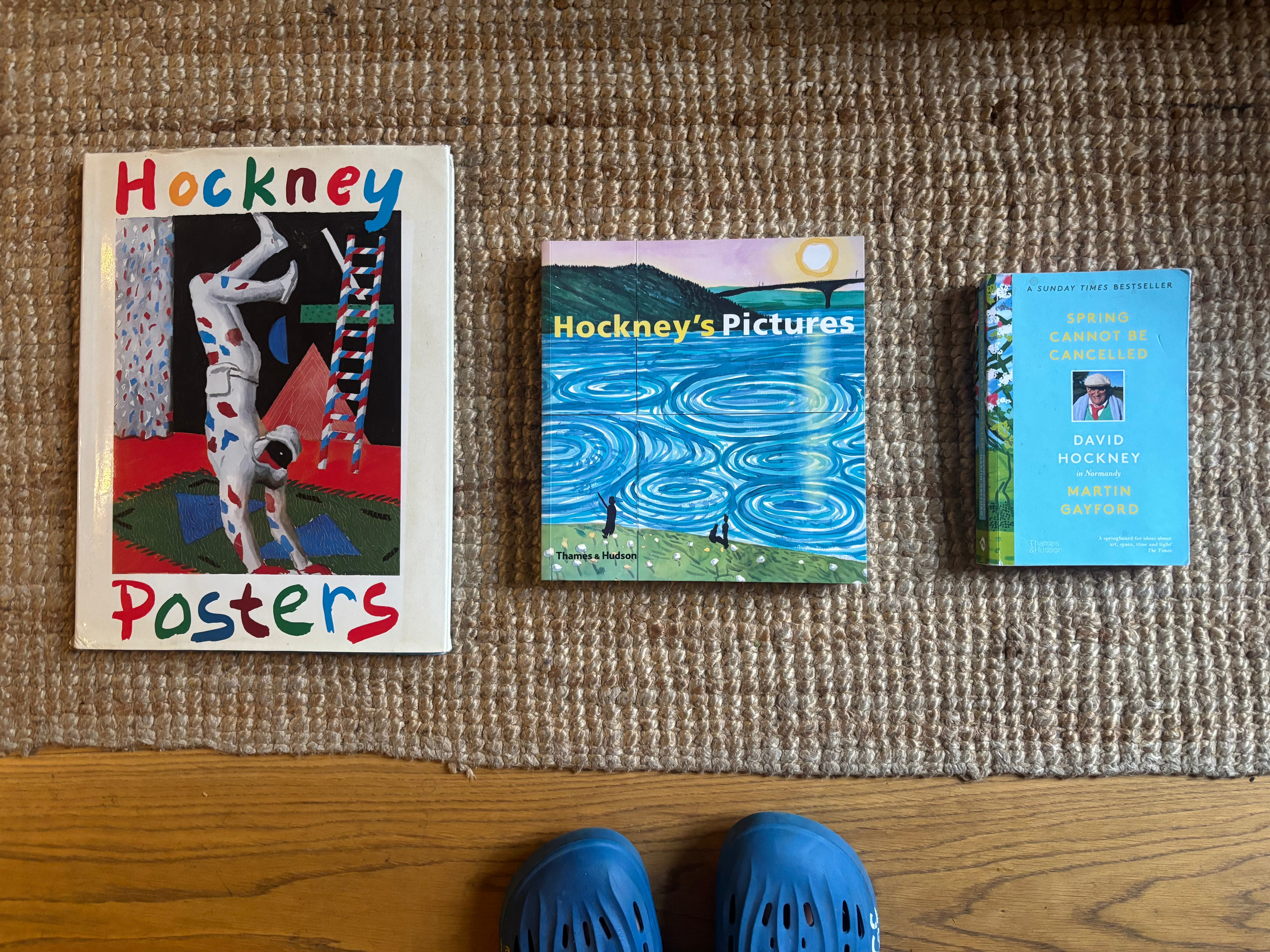
As soon as I touched down back in London, I revisited my trio of books devoted to him. I wanted to keep Hockney and his magic close. (Note the cobalt blue crocs-I’m positive he would approve). You might think I was a little blue flicking through these pages but you simply cannot be glum when bathing in the sheer joy and ebullient colour palette found amongst his wealth of works.
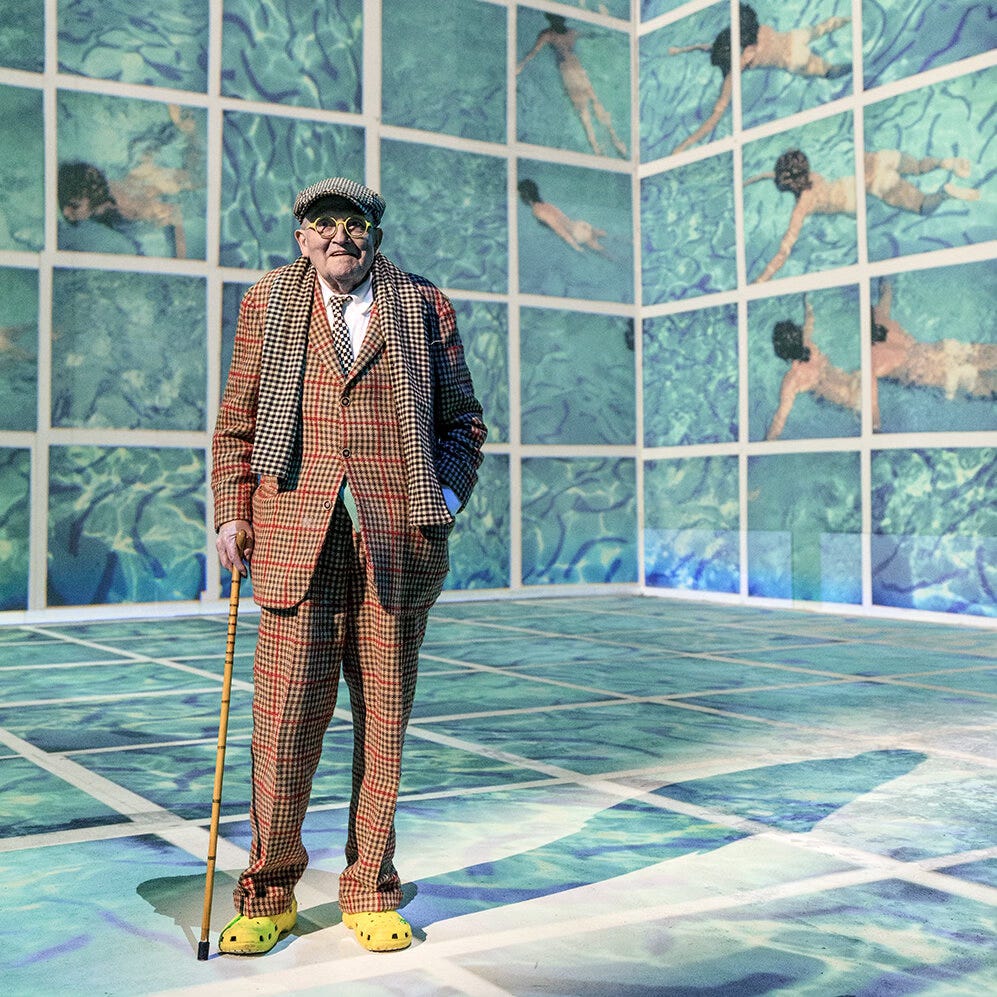
Temperatures and the far right are uprising. As ever the media cycle is grim. Sometimes the most rebellious thing you can do is be hopeful and there’s no better place to find it than in the expanse of Hockney’s work. There’s always a commitment to nature, colour, family and friends; pillars we can cling to whatever the weather. “I have always believed that art should be a deep pleasure…there is always everywhere, an enormous amount of suffering. But I believe my duty as an artist is to overcome and alleviate the sterility of despair…New ways of seeing mean new ways of feeling… I do believe that painting can change the world.”
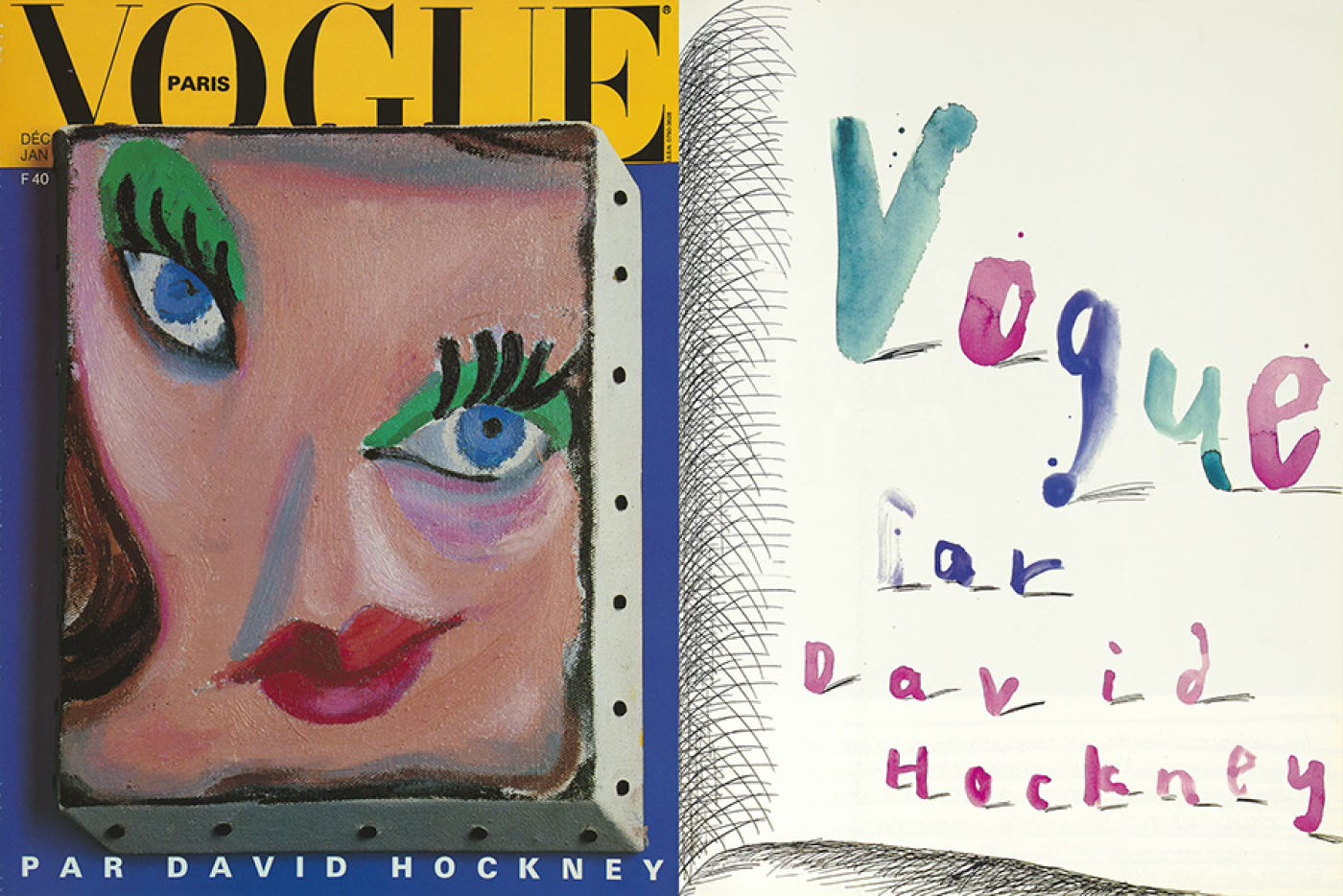
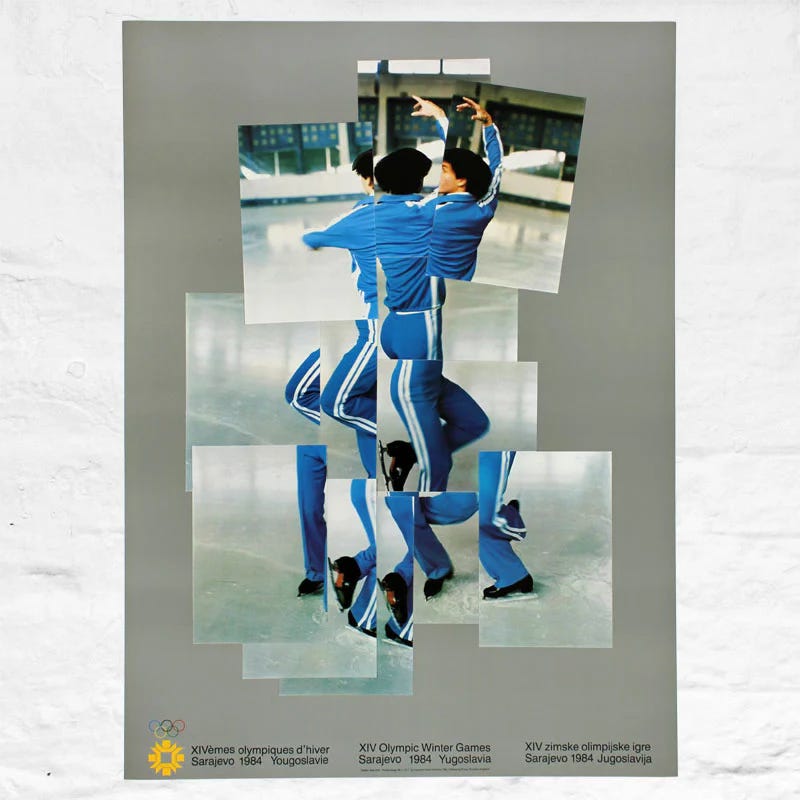
Hockney changed my little world when I drained my savings and bought my little flat 10 years ago. The walls were bare, a drab white that were in desperate need of colour, interest, beauty and so I found myself browsing the Tate shop. Without any hesitation I opted for David Hockney’s Bigger Splash (1967). It’s flat and yet energetic, serene but buzzing, modern and a classic. I loved it and hung it proudly in my kitchen. It reminded me that summer was coming during the dark depths of winter. It told me to always make time to play, to splash, despite the 9 to 5 grind.
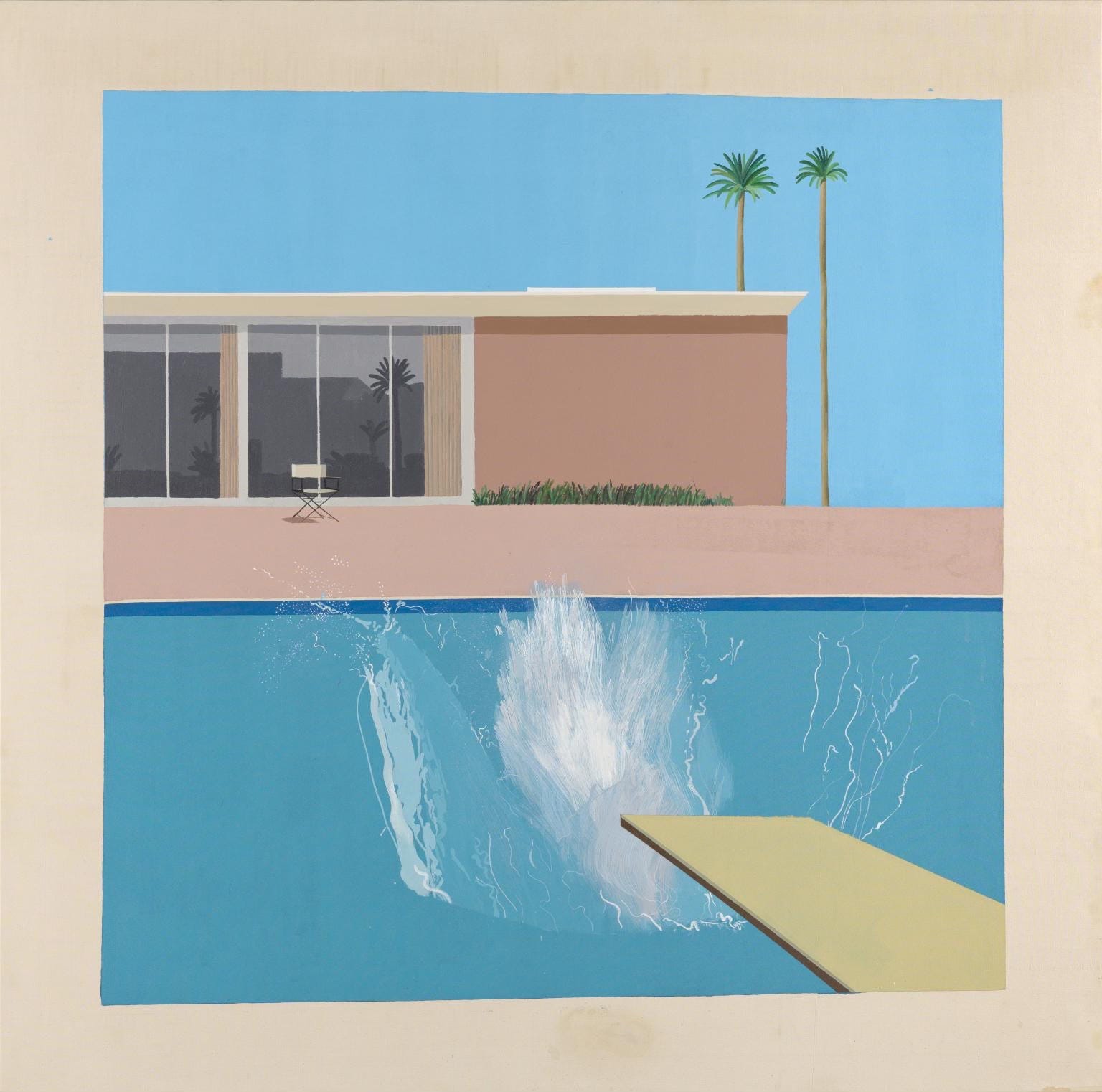
10 years later I’m still in the same flat but the print isn’t up anymore, not because I’ve fallen out of love with it, but because Hockney’s work stuns you and stays with you. It deserves far better than the dodgy IKEA frame I had tacked it into. I don’t necessarily need it on my external walls for it is imprinted on the internal walls of my memory.
I enjoyed Hockney’s work long before I nailed a replica into my kitchen wall for he’s one of those rare artists that appeals to people of all ages, ethnicities and backgrounds. His art is a celebration of life and unifies us all. Hockney outlined his role as an artist “is [to] bring them closer to something, because of course art is about sharing: you wouldn’t be an artist unless you wanted to share an experience, a thought. I am constantly preoccupied with how to remove distance so that we can all come closer together, so that we can all begin to sense we are the same, we are one.”
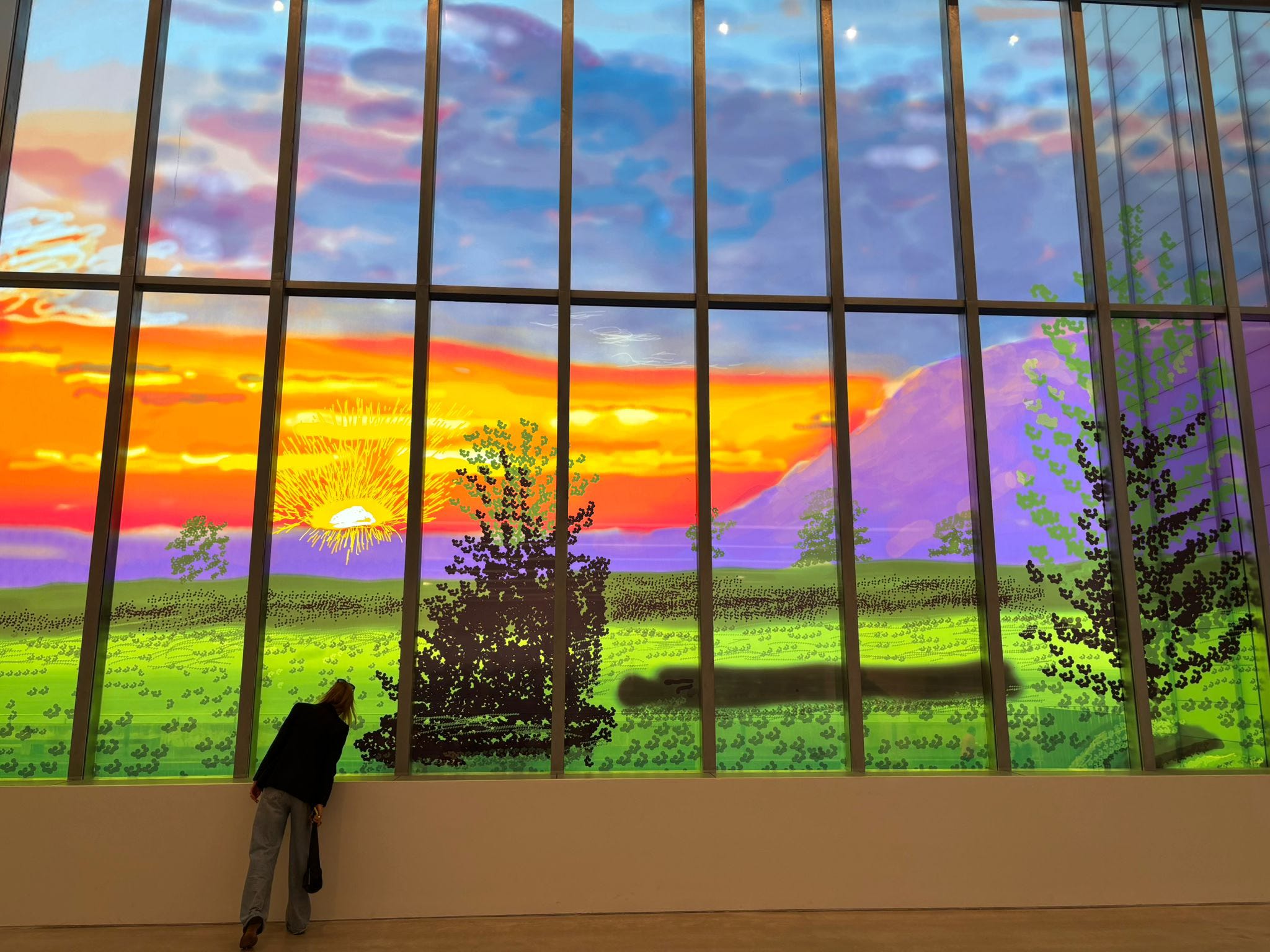
Hockney undoubtedly fulfilled his prophecy. Across his many exhibits I moseyed my way through over the years, I’d always find children, the elderly and everything in between gazing and smiling at his enormous range of work and boy could that man work. Prolific doesn’t do his dogged conscientiousness justice. Throughout his six decade career, Hockney worked across mediums and pushed genres. There were no boundaries for Hockney, just an insatiable hunger to create art and make it accessible to all. He explained, “I am an artist who is always working. I know some people think I spend my time just swimming around or dancing in nightclubs. That’s fine. But I don’t actually. I work most of the time.” In conversation with The Guardian he stated, “I was never much of a party boy. I am a worker. An artist can approve of hedonism, but he can’t be a hedonist himself.”
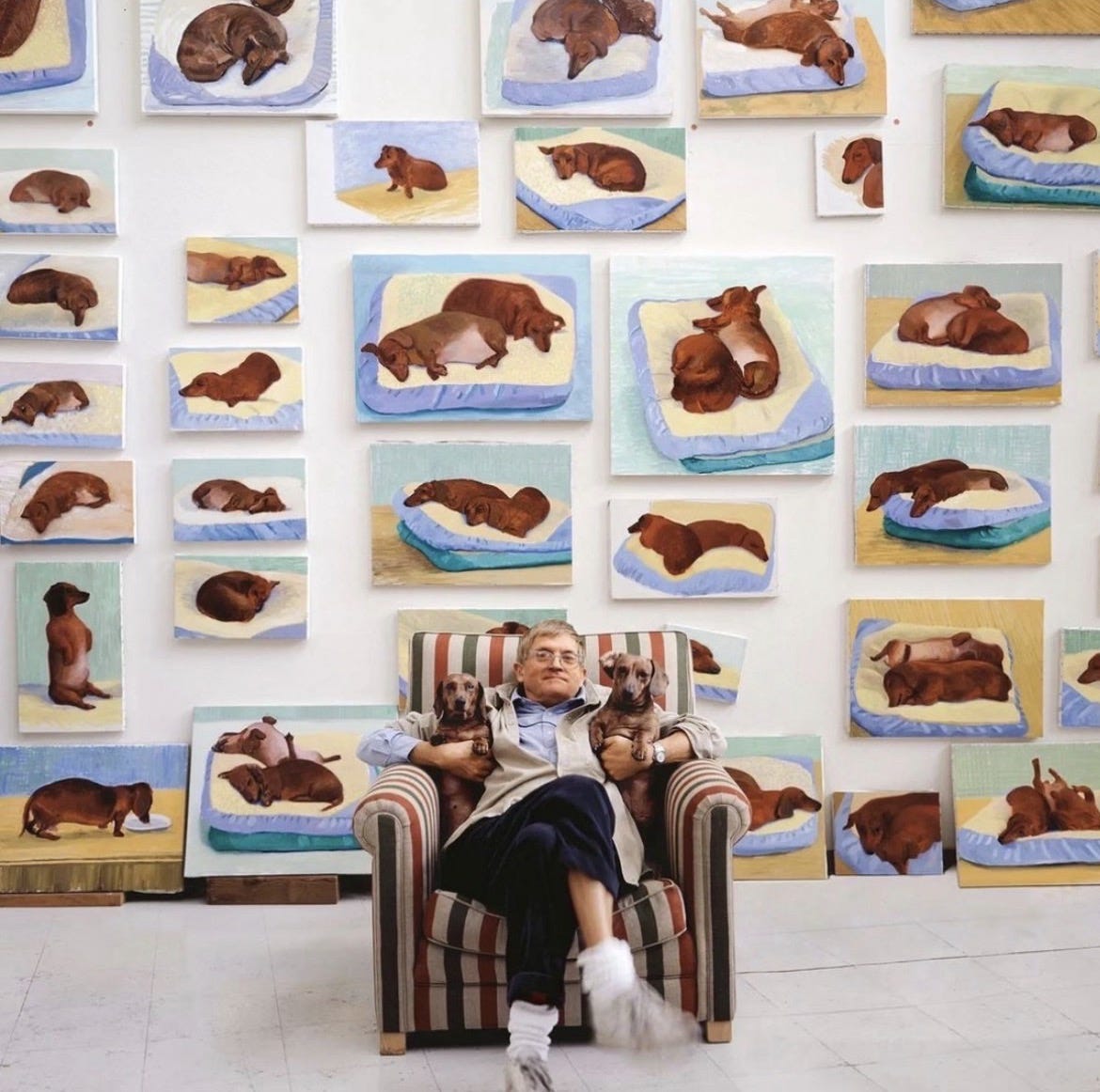
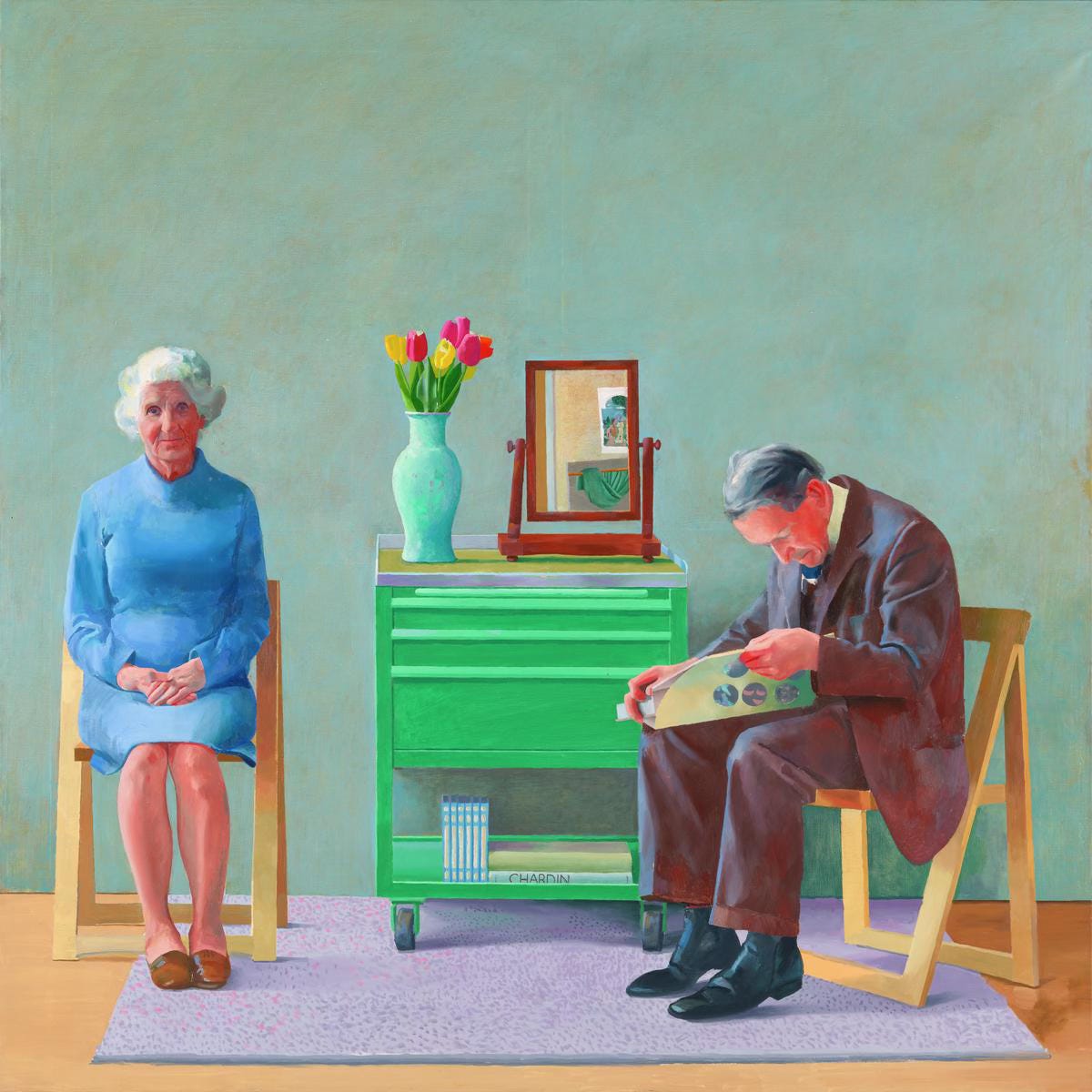
There was one boundary though and that was his insistence to never paint anyone he didn’t know. This was the reason why he refused to paint Queen Elizabeth II despite many requests. Hockney whole heartedly believed his work depicting his mother Laura to be the best he’s ever created because she is who he knew most intimately. Despite all the praise, the success and the fame (up until his death he was the highest earning living artist) Hockney was resoundingly humble. In 1990 he was offered a knighthood but rejected it because “he does not care for a fuss” Hockney said, “I don’t value prizes of any sorts. I value my friends.”
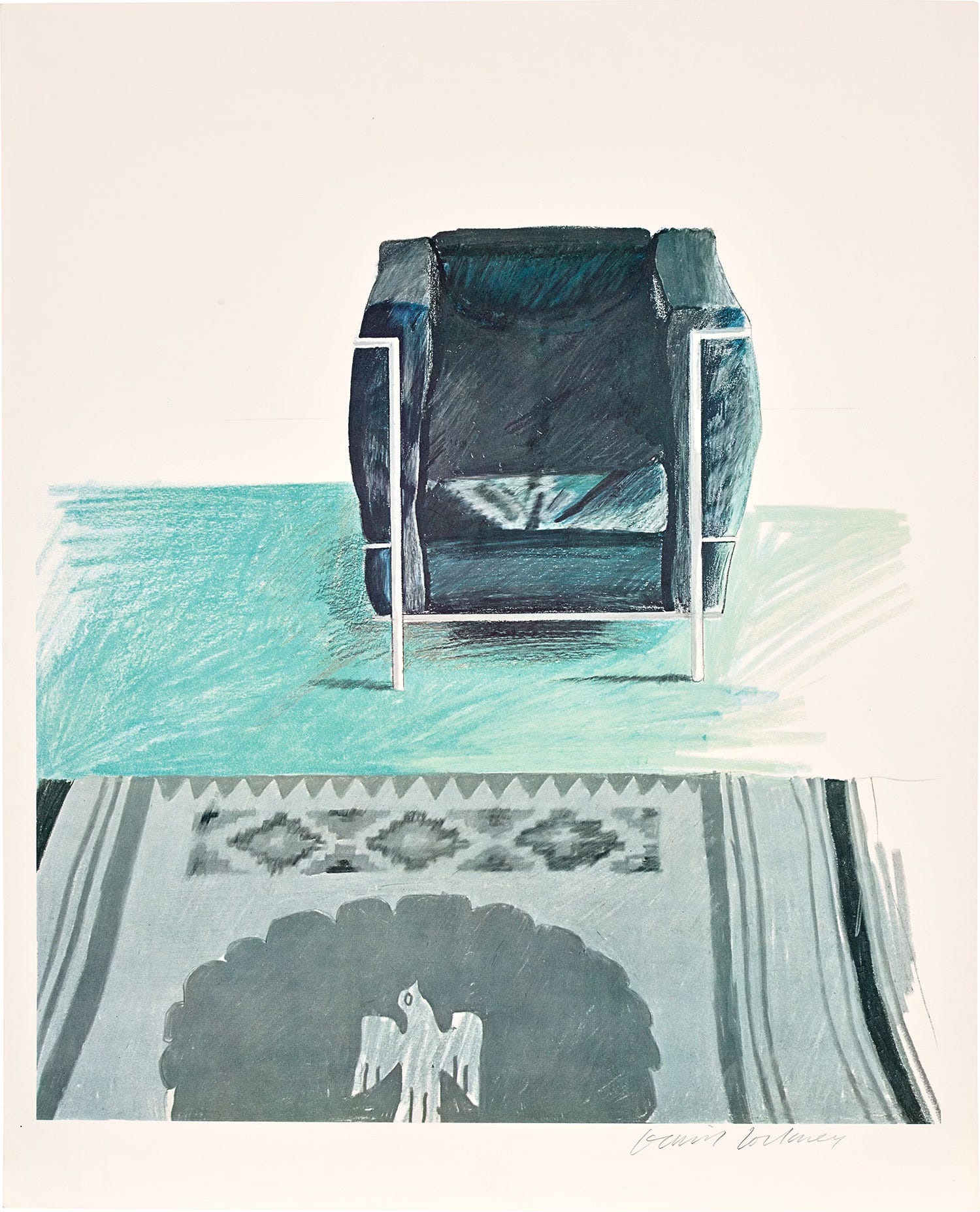
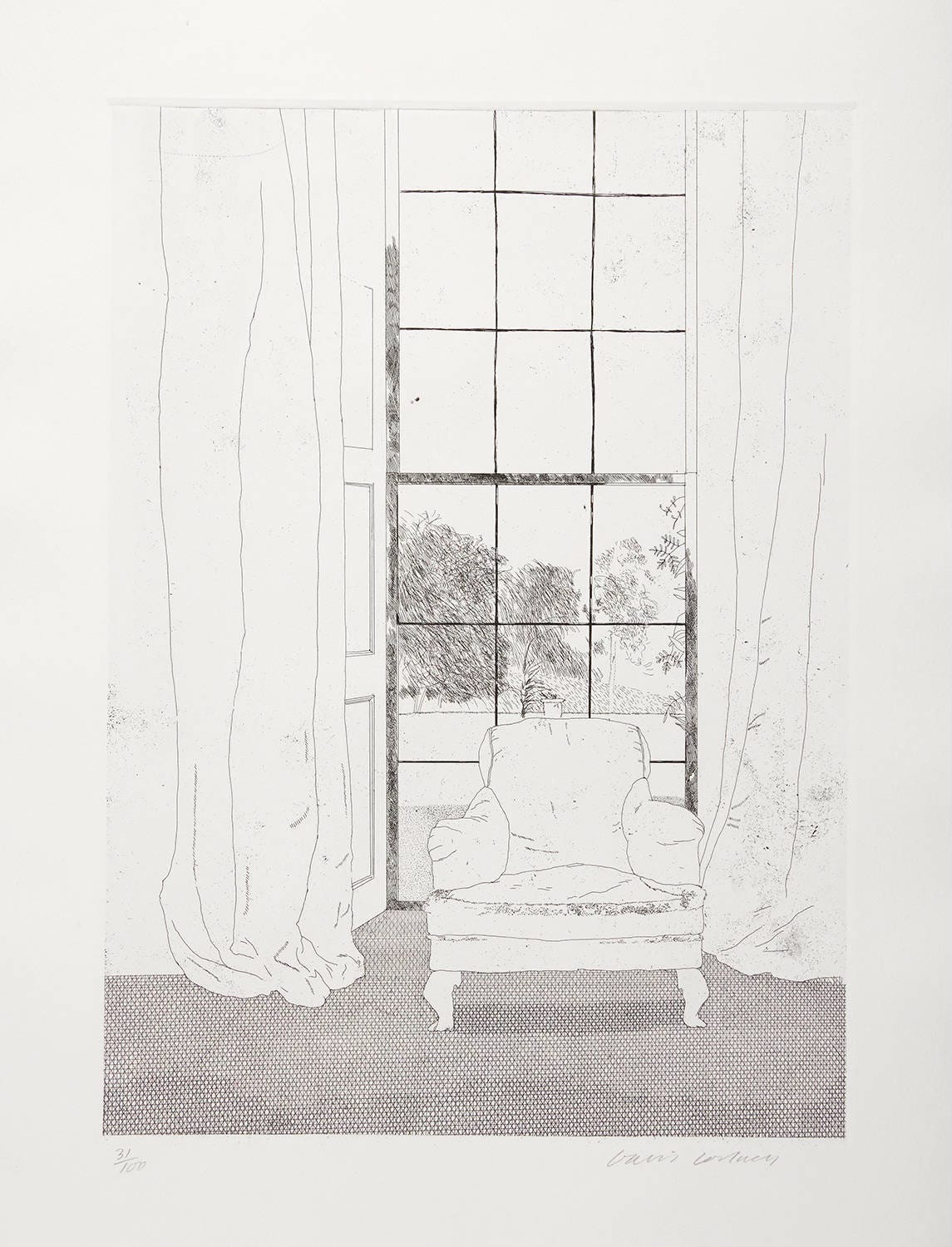
We get a resounding sense of Hockney’s geniality in his work. His landscapes, portraits and worlds are so inviting, you want to climb into them. How does he do it exactly? Step in Three Chairs with a Section of a Picasso Mural, 1970. Hockney pondered, “I had always had a great interest in Picasso, but I never quite know how to deal with it — like most artists, he seemed too big and his forms were too idiosyncratic. How do you learn? How do you use them?”
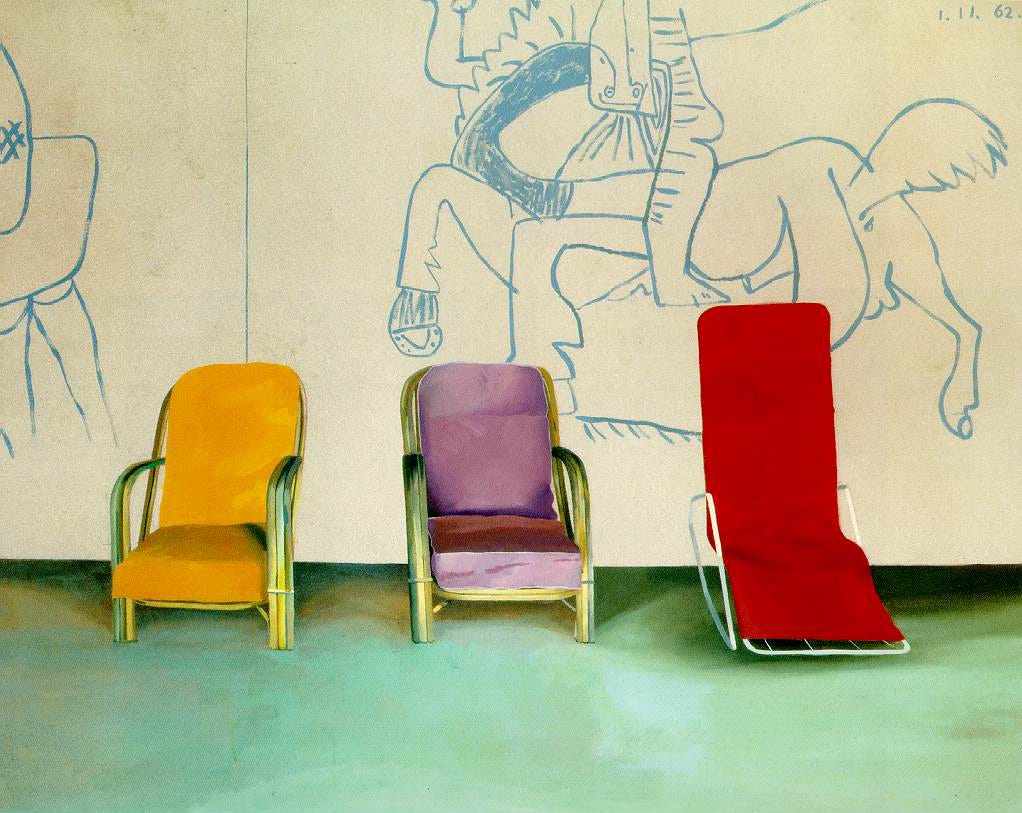
And so he unpretentiously plonked three jewel coloured armchairs in front of the mural; one amber, one amethyst, one ruby. He changed the narrative, immediately we feel more relaxed, more at ease with a great masterpiece. We can get comfy in there, really take it all in. Suddenly a Picasso mural isn’t quite so intimidating. In conversation with Martin Gayford (from Spring Cannot Be Cancelled: David Hockney in Normandy) Hockney explains the importance of varying artistic voices. “That’s why you need lots of artists, and not just painters but all kinds. They look at life from another angle.” Media echo chambers take note.
Hockney depicted chairs frequently throughout his career thanks to his enormous admiration for Vincent Van Gogh, another fellow painter of chairs. Hockney explained to Gayford, “There’s no such thing as a copy, really. Everything is a translation of something else.”
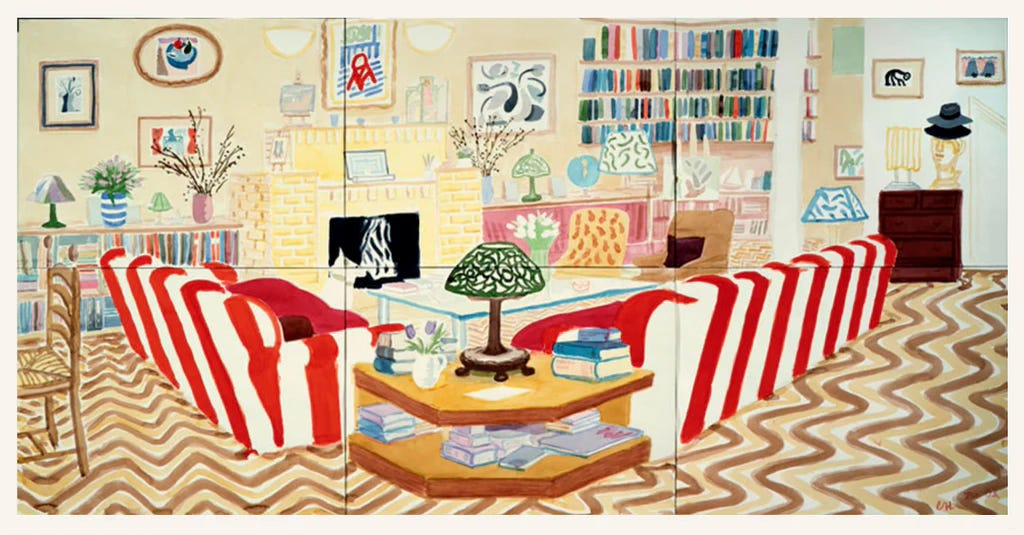
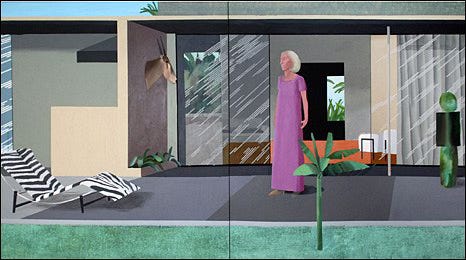
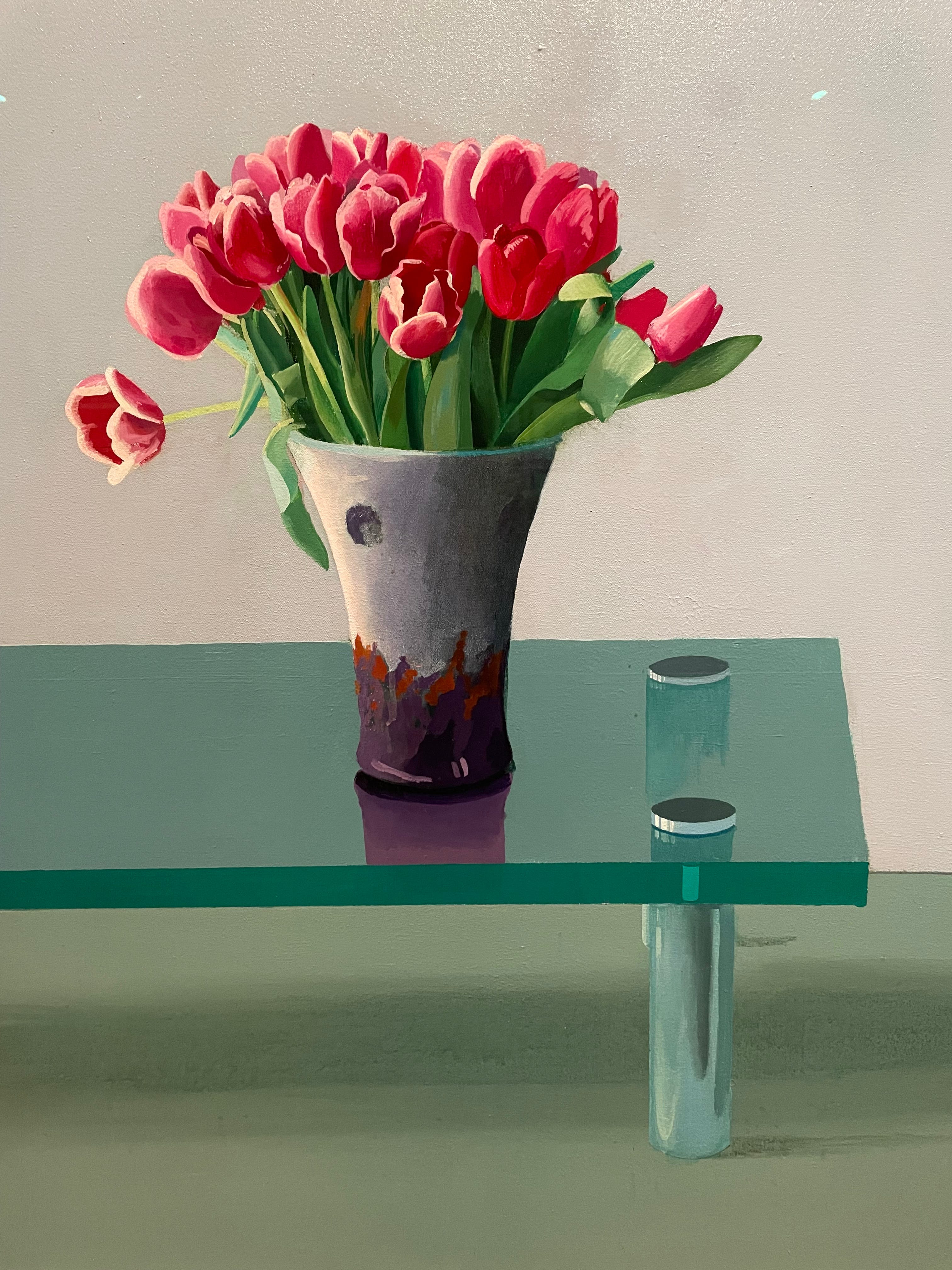
Another reason for why I have such an affinity with Hockney’s art is because so often there’s a jug or vase of flowers perched atop a table somewhere. I recently listened to Hockney’s BBC Radio 4 Desert Island Disc interview with Roy Plomley where he admitted to Plomley that whilst painting his Portrait of Sir David Webster in 1971, a commission to mark the retirement of Webster’s retirement as the General Administrator of London’s Royal Opera House, that “I probably spent longer painting the tulips than him” because Hockney wasn’t familiar with Webster.
When scrolling through my phone for images I’ve taken of Hockney’s work over the years I stumbled across this very painting I saw at the National Portrait Gallery, but I hadn’t taken a snap of Sir David Webster, it was the tulips that bewitched me. They stand gleaming and buoyant in their rich pink hued glory. Move over Webster, hello tulips.
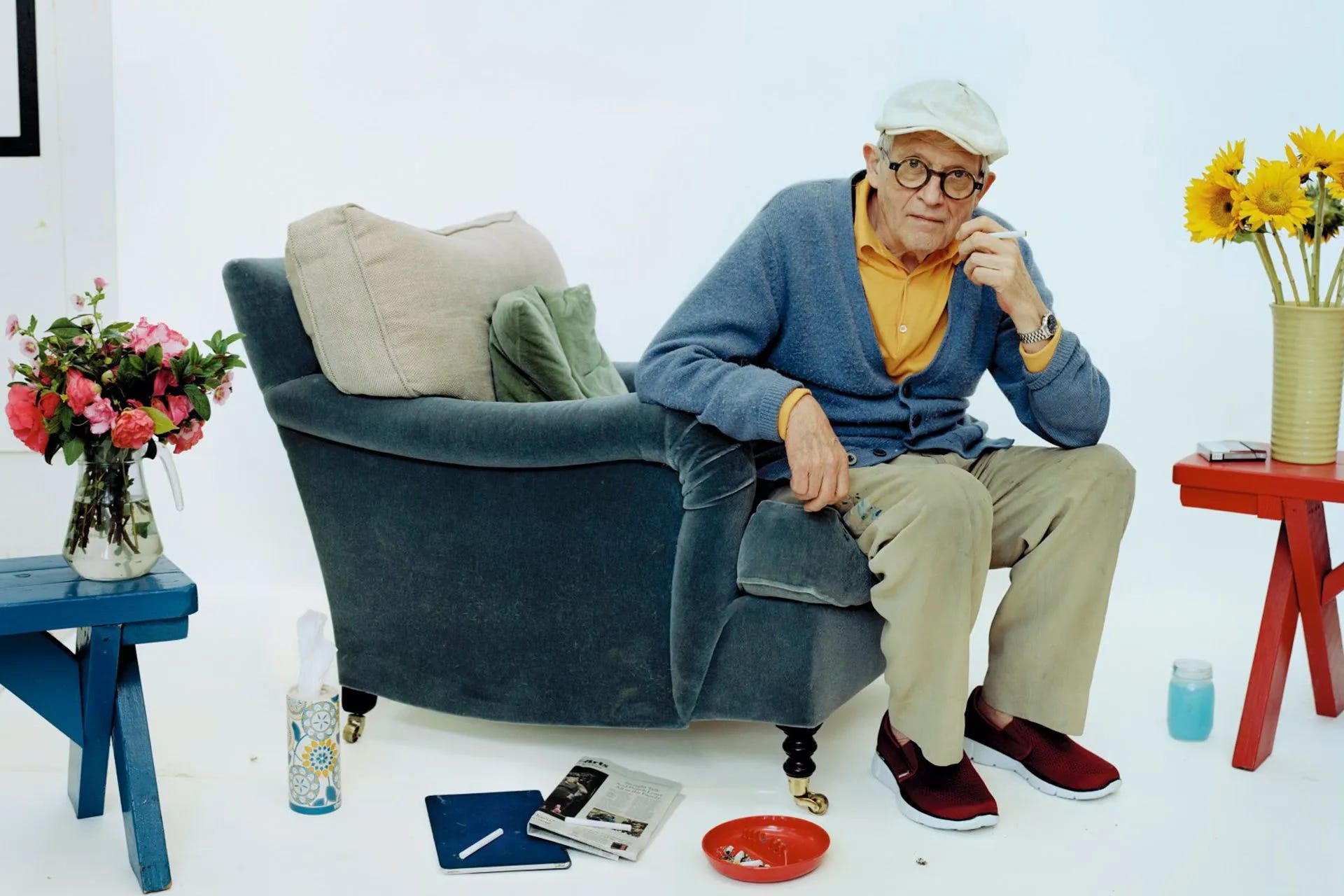
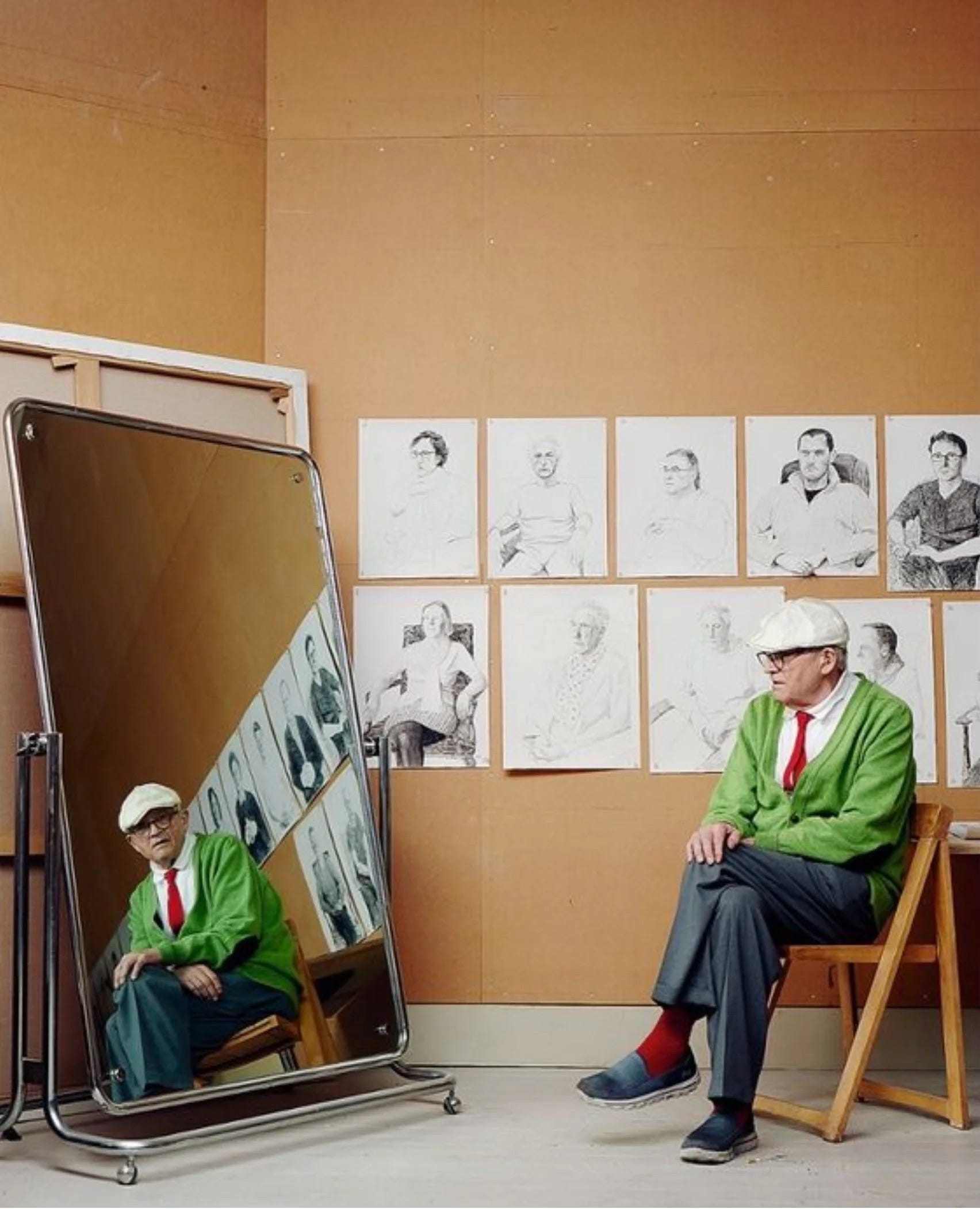
You can’t really think about Hockney without thinking about his impeccable sense of style. He really understood the power of clothes to lift a mood, the joie de vivre to be found in clothing. His uniform played with Savile Row tailoring offset with a striped knitted tie, or a primary coloured cardigan, a jazzy pair of glasses and a sensible shoe. (Dare I admit that I think he would delight in Younger Self dressing?) Please can someone commission a coffee table book entirely devoted to his fashion sense? The people need it.
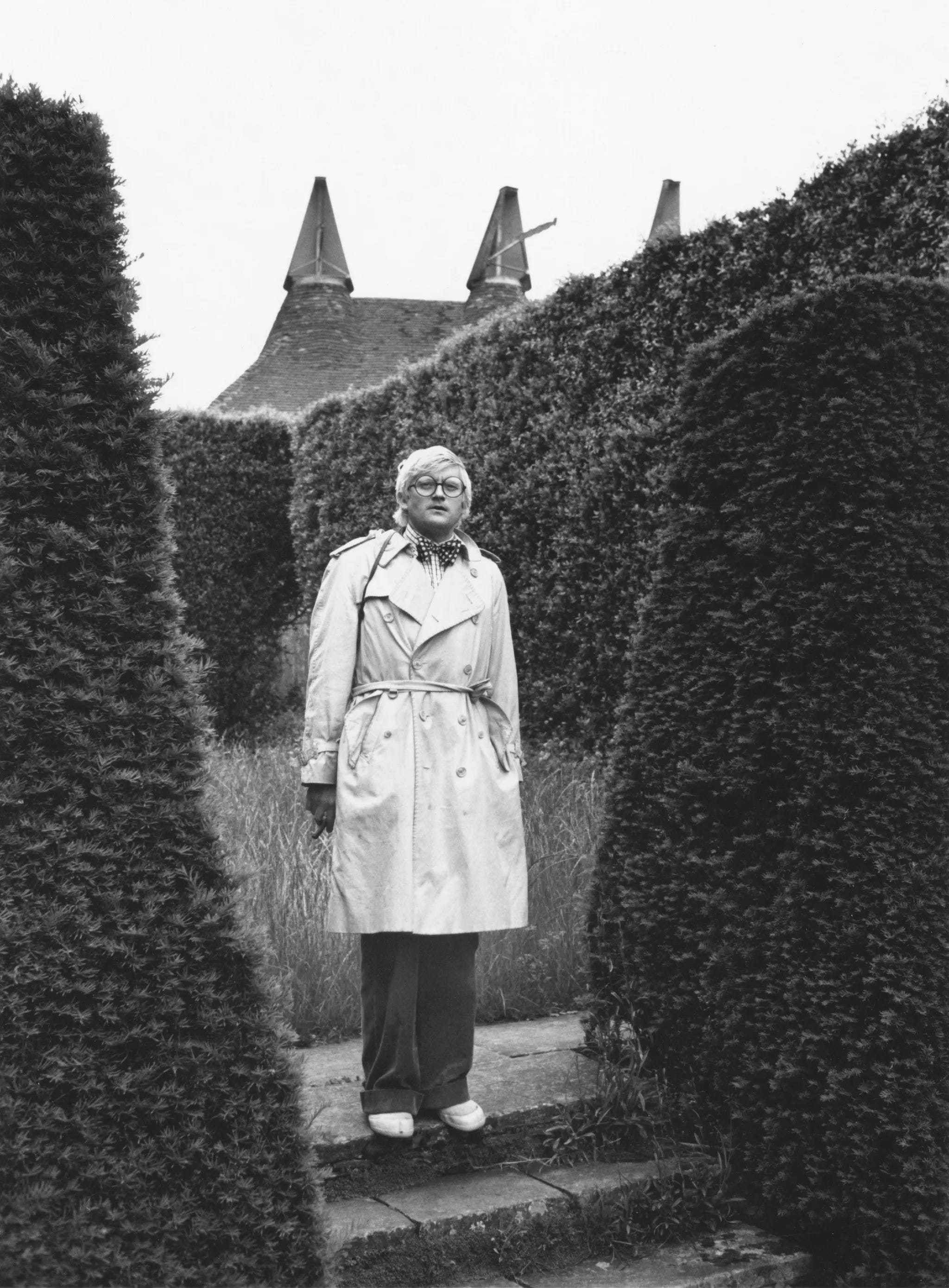
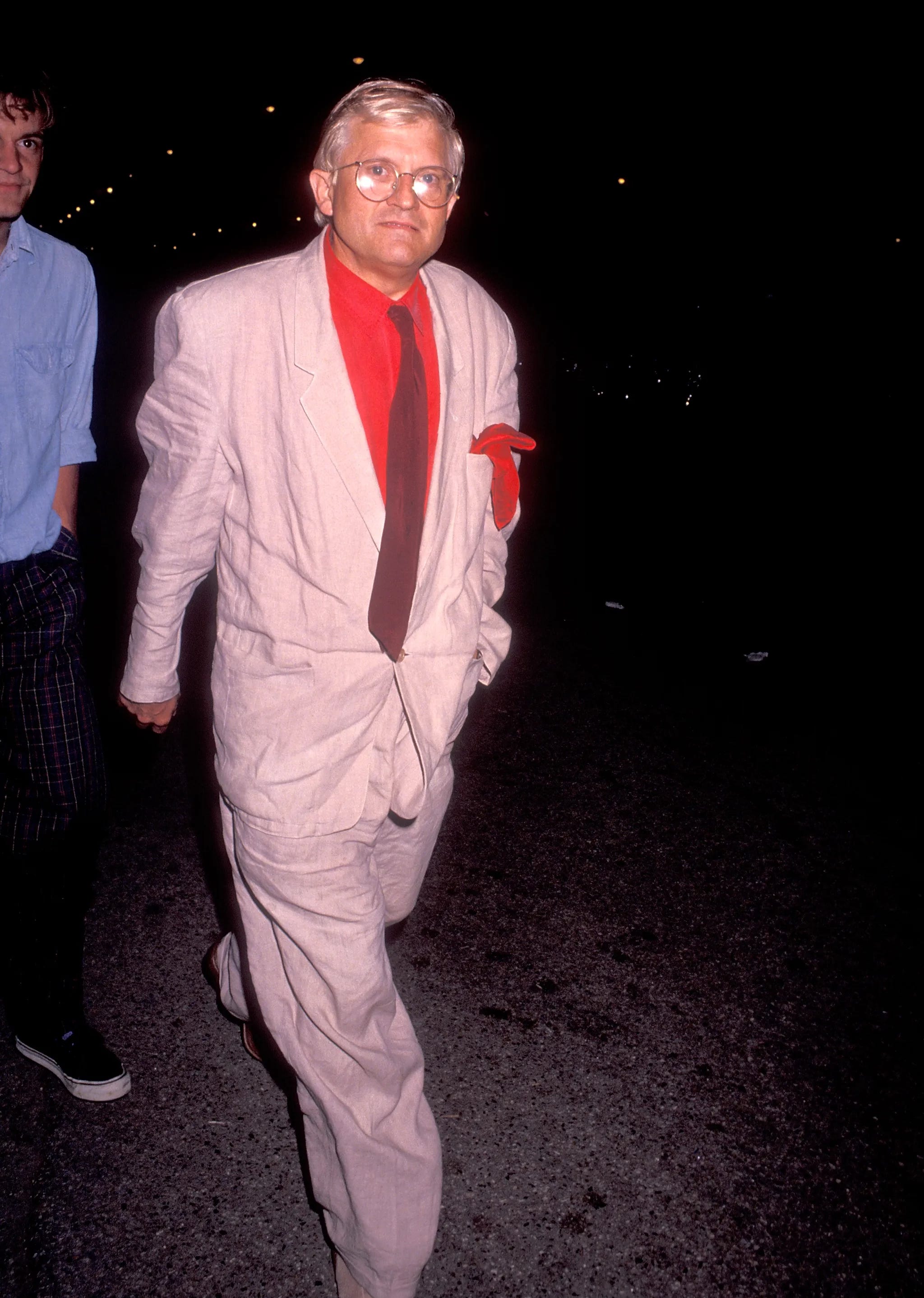
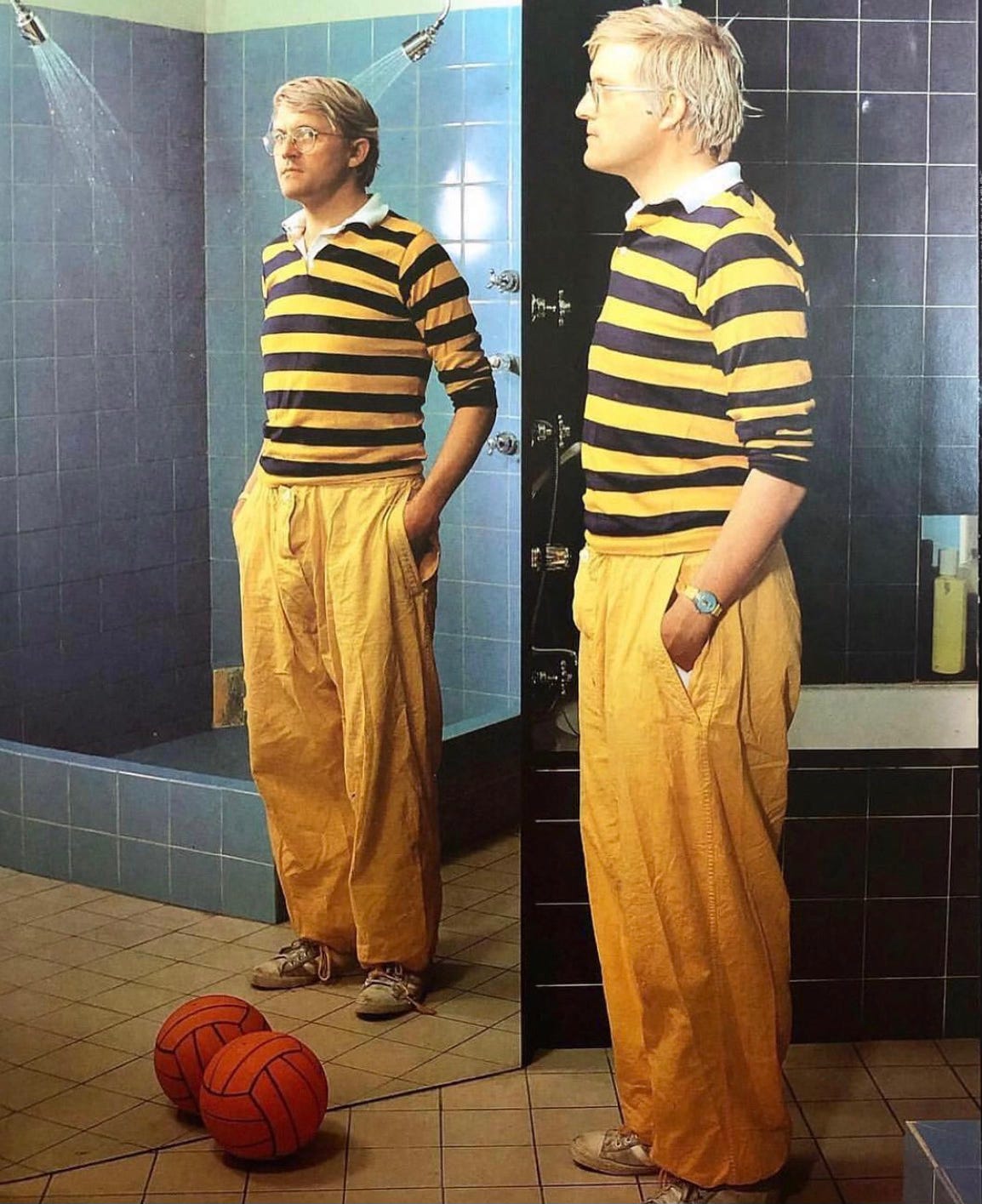
Fashion, art, flowers, interiors, friendship. He’s a man after my own heart. Don’t mistake him for a man of frivolity though. He moved to Normandy in 2019 during the pandemic and it was arguably the most productive period of his entire career. Martin Gayford recalled how Hockney “managed to find more and more in less and less.” A way of life we should all aim to live by.
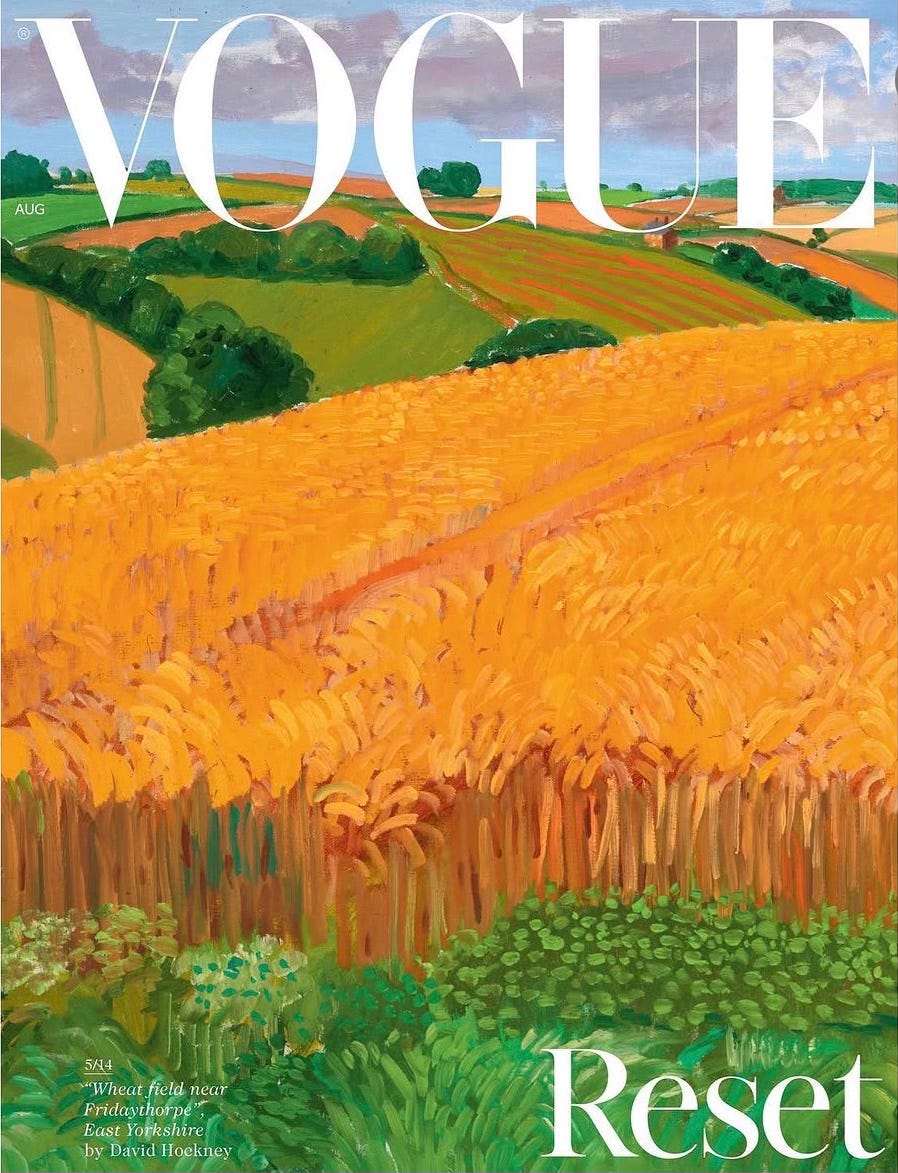
It’s hot. Baking hot. It’s all we can talk about. My sentences are short because I’m completely spent. As someone that’s always on the move and a recovering productivity whore, I rather enjoy the slowing down blazing heat enforces upon you. Last week I inflated and filled my trusty paddling pool, a much discussed and anticipated annual task. Immediately after execution, I pathetically pinged photos of it to friends and family, boasting over my “infinity pool”. Kicking back in the chilling waters from the outdoor tap readers, I felt as though I’d made it. The dogs bollocks kinda stuff.
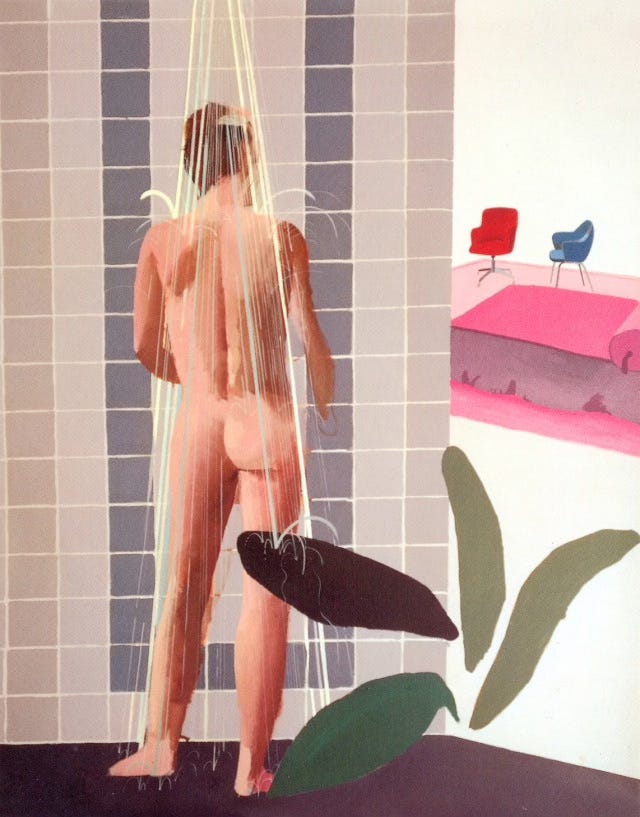
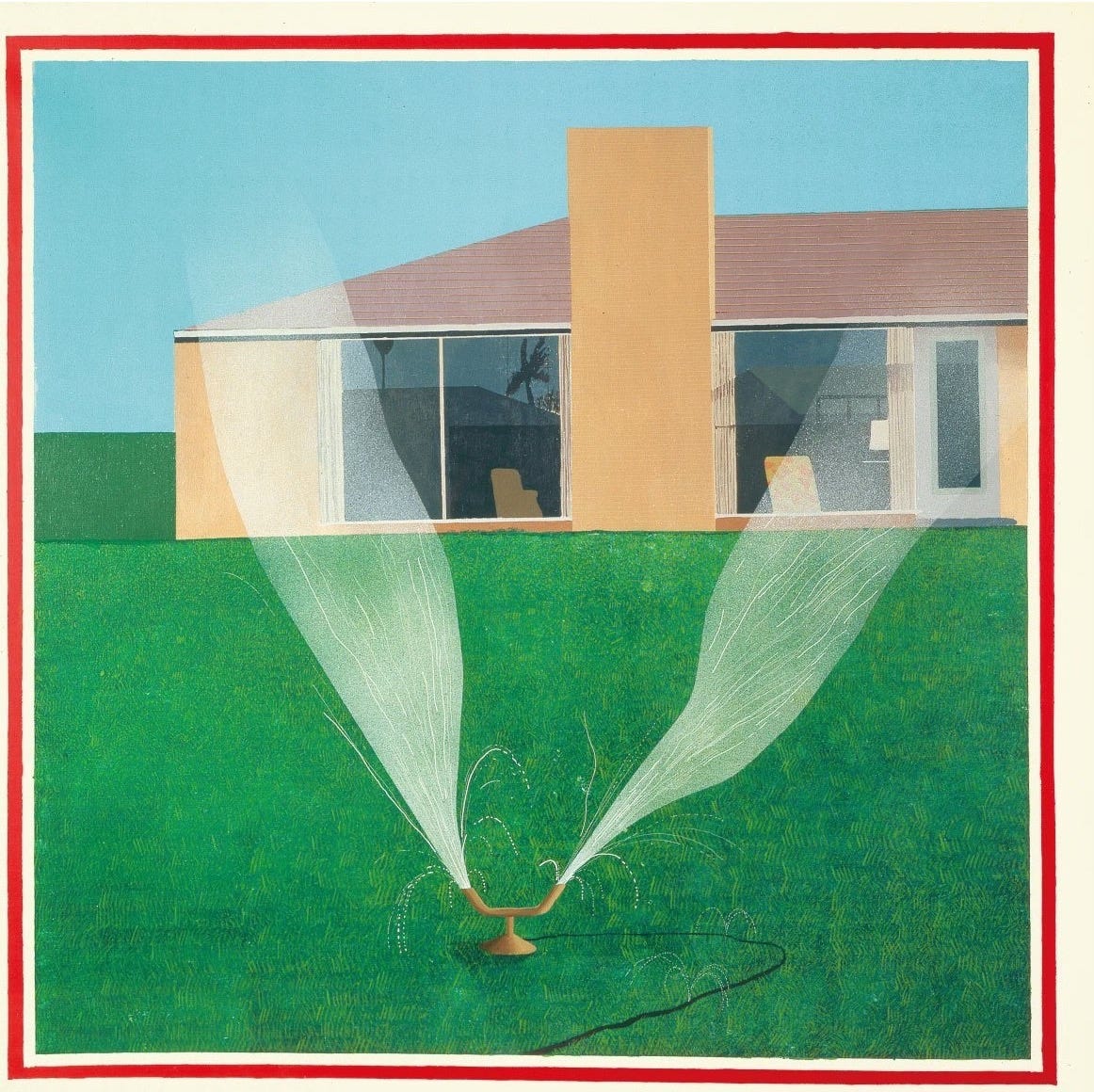
The heatwave rumbles on and I find myself daydreaming in a sweaty stupor of David Hockney’s cool scenes; sprinklers are spraying, showers are running, figures are swimming. I drink up his art. Ice tinkles in the glass.
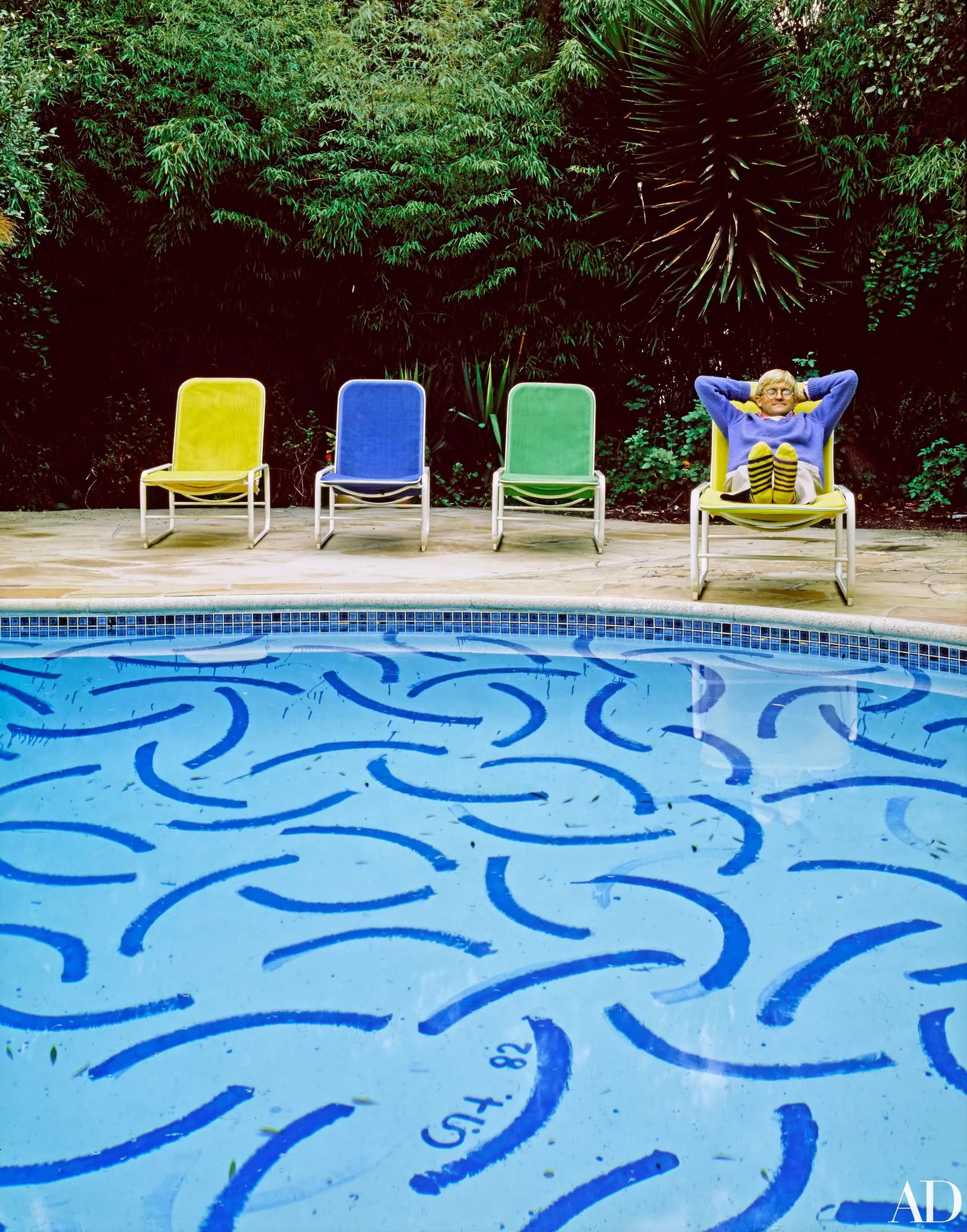
Same same but different.
And remember Hockey’s mantra “I do believe that painting can change the world. If you see the world as beautiful, thrilling and mysterious, as I think I do, then you feel quite alive.”
Loved every word xxx
Lovely cardys